EmbodAI
An illustrated history · selected milestones

First words.
Then out in the world.

Machines were sensing and acting long before today's language models. Their history gives EmbodAI something to learn from.

This is a selection of experiments in physical and social intelligence, not a complete family tree. Some reacted, some planned, some learned. Those are different achievements.

The question running through this history: how does contact with the world change what a machine can do?

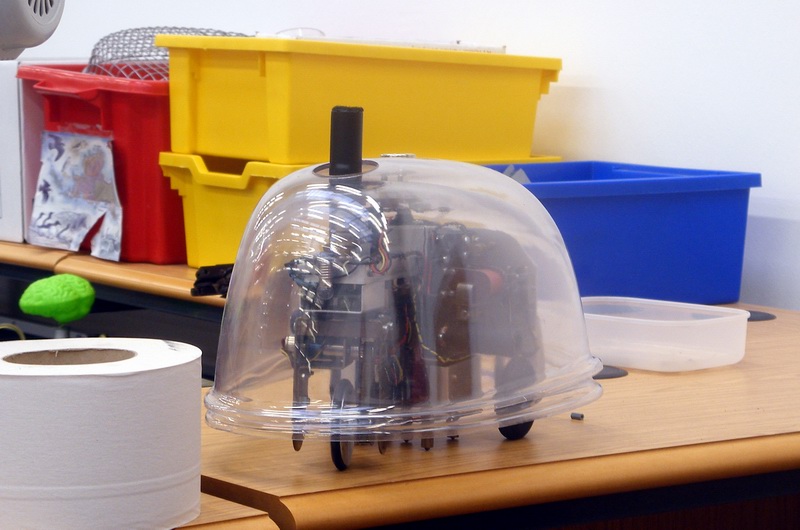
A replica of Grey Walter's small wheeled tortoise robot, showing its shell and mechanical components.
A later replica of a Grey Walter tortoise, photographed in 2009. Anders Sandberg · CC BY 2.0. Image unchanged.
1948–49W. Grey Walter · Bristol

A little circuit.
A moving creature.

Neurophysiologist Grey Walter built Elmer and Elsie: small mobile machines whose sensors and motors connected them to their surroundings. His tortoises helped explore how simple mechanisms could produce lifelike behavior.

The idea to carry forwardBehavior emerges from a whole system: circuitry, body and environment. Lifelike behavior alone does not establish learning or subjective experience.
Read: The Grey Walter Online Archive, UWE.

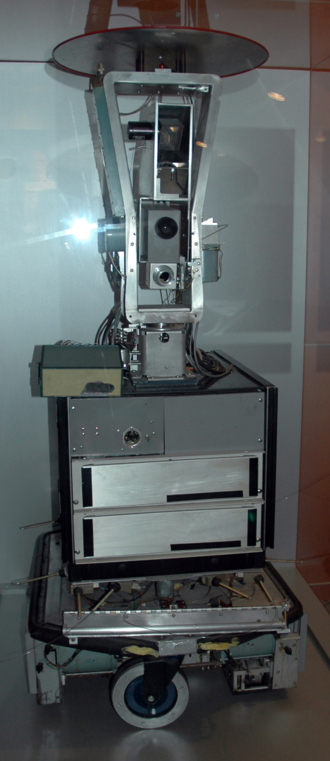
Shakey in a museum display case: a tall wheeled robot with a camera and sensors above its base.
Shakey at the Computer History Museum, photographed in 2007. Marshall Astor; original crop by Sanchom · CC BY-SA 2.0. Wikimedia thumbnail; no additional crop.
1966–72SRI · California

Perceive.
Plan. Move.

Shakey brought sensing, planning and physical action into one mobile robot. It could plan routes and rearrange simple objects in a controlled environment.

The idea to carry forwardA plan has to meet a physical world. What a machine perceives must connect to actions its body can actually perform.

Read: SRI's history of Shakey.

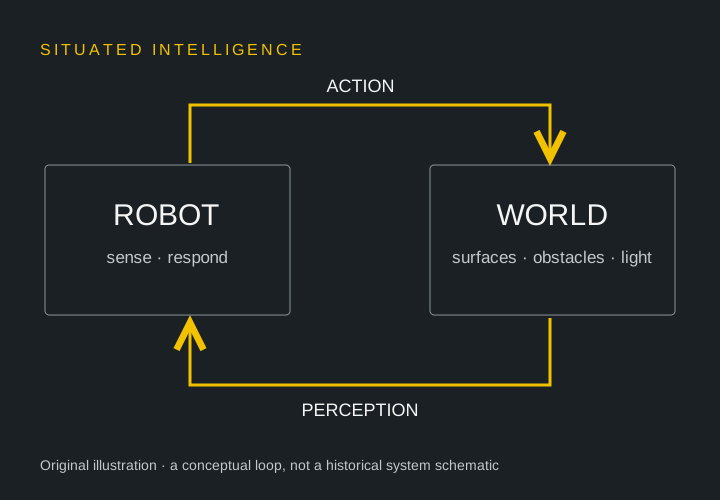
Conceptual diagram of a robot sensing and responding to the world in a continuing perception and action loop.
Original EmbodAI illustration of a situated action–perception loop. A conceptual explanation, not a reproduction of a historical robot or architecture.
1991Rodney Brooks · MIT

Intelligence in
the encounter.

In Intelligence without representation, Brooks argued for building complete creatures whose capabilities grow through direct contact with the world. Perception and action belonged together, rather than being isolated problems waiting to be assembled later.

The idea to carry forwardWork with a functioning body in an environment. This approach helped challenge the assumption that intelligence must begin with an elaborate internal description of the world.

Read: Brooks's 1991 paper (PDF).

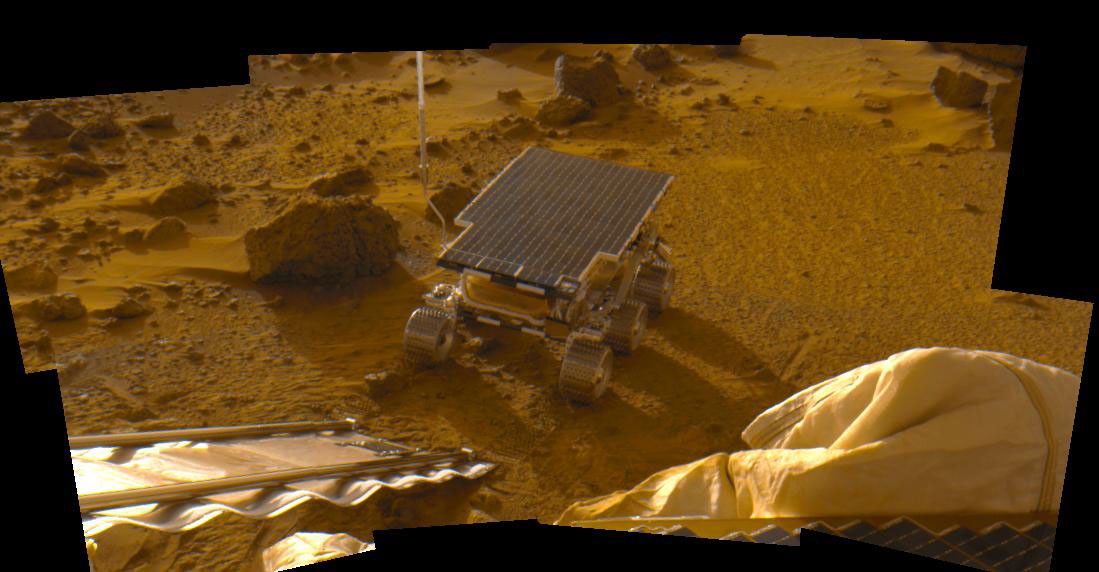
Sojourner sitting on the rocky surface of Mars beside the Pathfinder lander's deflated airbags.
Sojourner newly deployed on Mars, 1997. NASA/JPL · PIA01551. NASA web rendition; no additional crop. Image-use policy.
1997NASA / JPL · Mars Pathfinder

A body somewhere
we could not stand.

Sojourner reached Mars with Pathfinder in July 1997. The small rover explored the landing site, taking images and making measurements while working with commands from Earth.

The idea to carry forwardA robot can extend human perception and action across distance. Successful remote exploration is a distinct achievement from learning a general physical intelligence.

Read: NASA's Mars Pathfinder mission record.

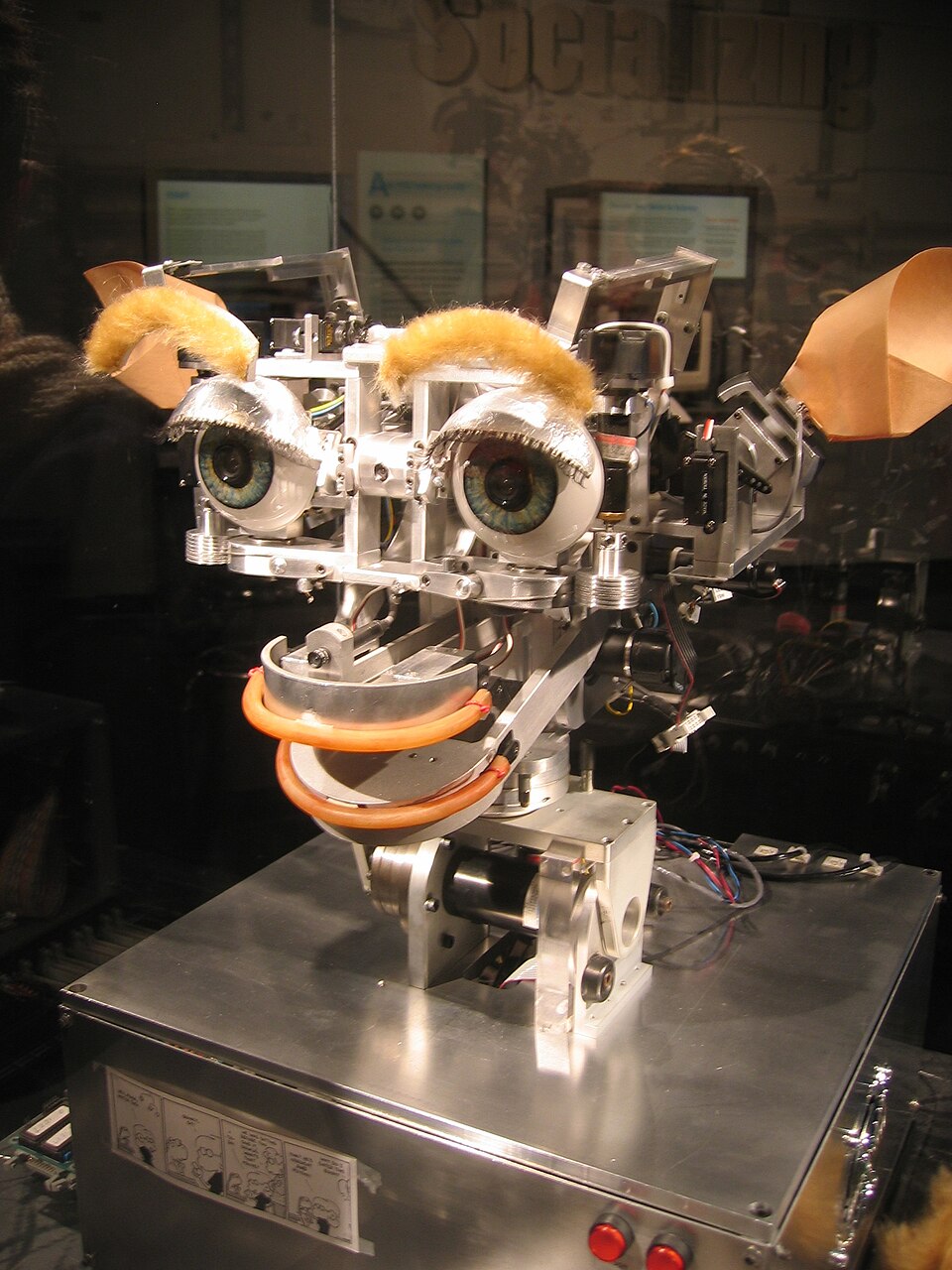
Kismet's expressive robotic head with large eyes, movable ears, eyebrows and visible mechanical parts.
Kismet photographed in 2005. Jared C. Benedict · CC BY-SA 2.5. Wikimedia thumbnail; no additional crop.
1997 onwardCynthia Breazeal and colleagues · MIT

Learning has
a social body.

Kismet explored face-to-face interaction through gaze, expression, movement and vocal signals. The research asked how human responses and guidance could help a robot develop through social interaction.

The idea to carry forwardA body communicates as well as moves. People respond to its appearance and behavior; those responses can shape opportunities for learning.

Read: MIT's Sociable Machines project and MIT's account of the work beginning in 1997.

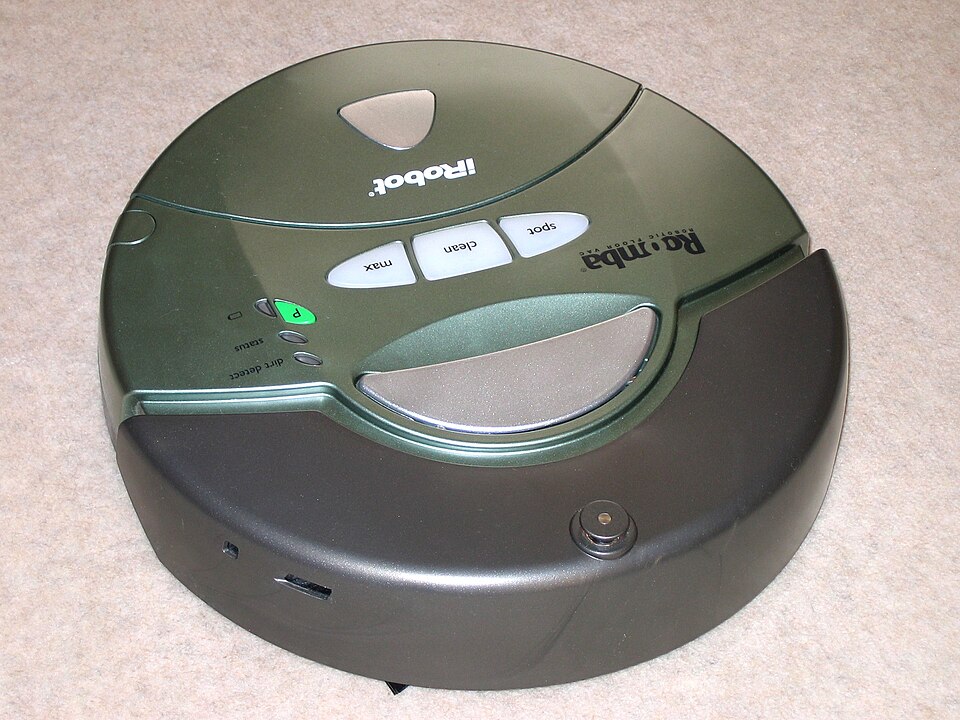
A green, disc-shaped iRobot Roomba vacuum cleaner on beige carpet.
A later Roomba model photographed in December 2005; the product line launched in 2002. Mike1024 · public-domain dedication. Wikimedia thumbnail; no additional crop.
2002iRobot · Roomba

A robot finds
work at home.

iRobot launched the Roomba vacuum-cleaning robot in 2002. It brought autonomous physical work into ordinary homes: moving across floors and responding to the surroundings while doing a useful job.

The idea to carry forwardEmbodiment can begin with a modest, practical task. Repeated encounters with furniture, floor surfaces and human routines make reliability a physical question. Everyday competence deserves a place in the history of intelligence.

Read: iRobot's company history.

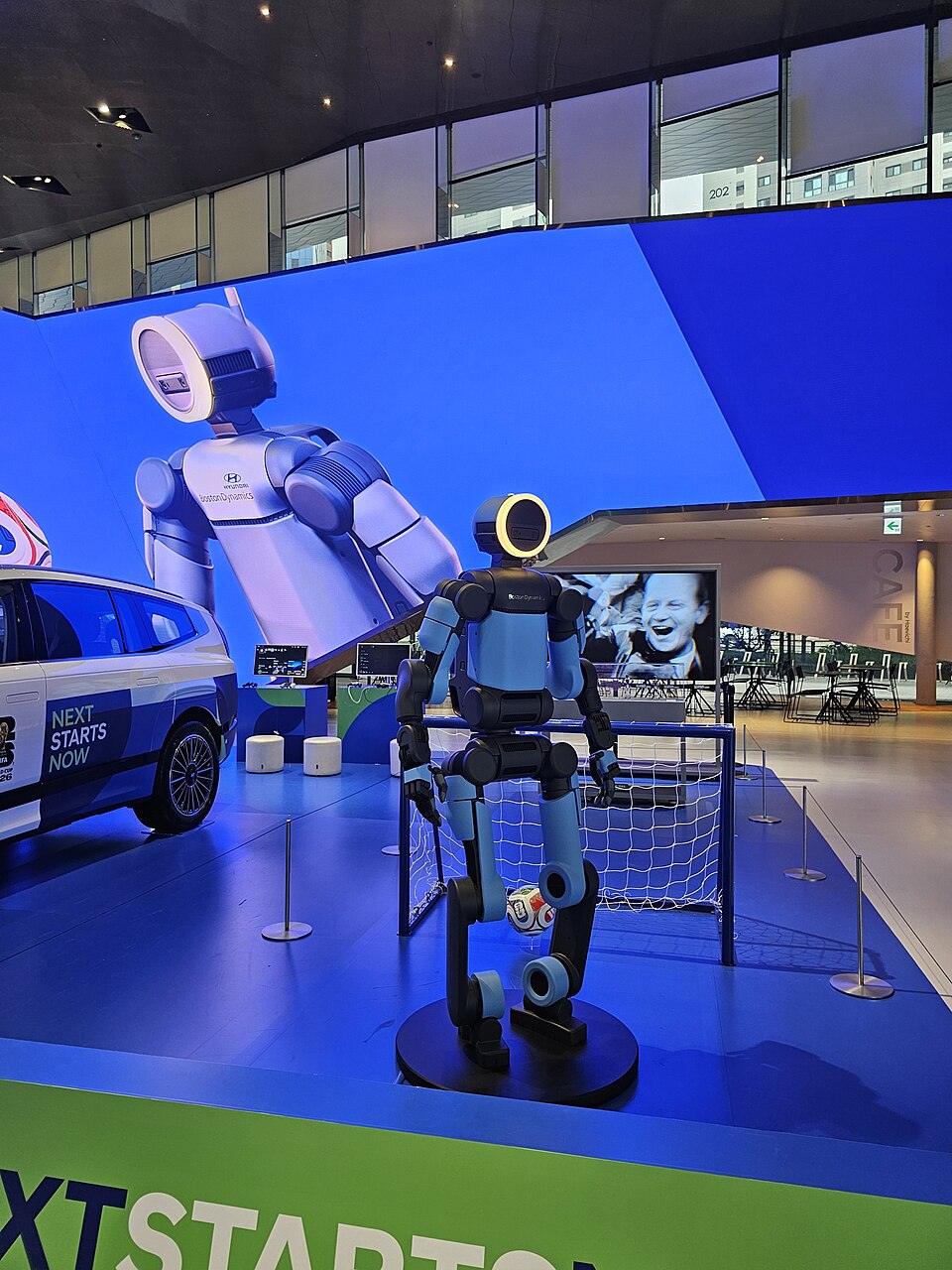
An electric Boston Dynamics Atlas humanoid on display at Hyundai Motorstudio Goyang, with a circular head and articulated limbs.
Electric Atlas on display in July 2026, illustrating the later generation announced in 2024. Damian B Oh · CC BY-SA 4.0. Wikimedia thumbnail; no additional crop.
2013 onwardBoston Dynamics · Atlas and Spot

Intelligence has
to keep its balance.

Atlas made its public debut in 2013 as a humanoid platform for the DARPA Robotics Challenge. Boston Dynamics introduced an all-electric successor in April 2024. Alongside Atlas, its four-legged Spot shows another route to useful mobile sensing and industrial inspection.

The idea to carry forwardA body must continually manage gravity, contact and motion. Balance and physical control are achievements in their own right; they also give learning systems a way to act in the world. What a robot can demonstrate and what it can reliably do across settings both matter.

Read: DARPA's Atlas history and Boston Dynamics on electric Atlas and its robot platforms.

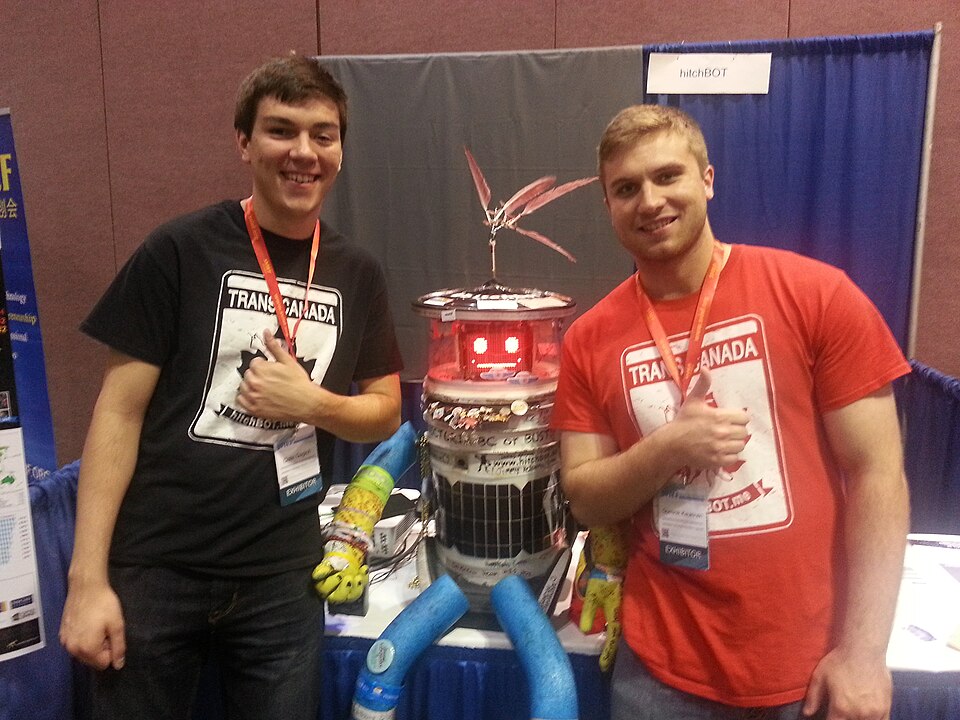
hitchBOT at an exhibition between two people, with its bucket-shaped body, illuminated face and foam arms.
hitchBOT at an exhibition in September 2014. Archie · CC BY 2.0. Wikimedia thumbnail; no additional crop.
2014–15A Canadian hitchhiking experiment

A journey made
of human trust.

hitchBOT crossed Canada in 2014 with rides from strangers. A subsequent U.S. journey ended in 2015 when the robot was vandalized in Philadelphia. It depended on people for transport.

What this means to EmbodAIEmbodAI's founding story regards that loss with sadness. It aspires to powered movement, communication and supervised environments. The hope that a more capable robot could have avoided the attack is a counterfactual belief, not an established fact.

Read: Heinz Nixdorf MuseumsForum's account.

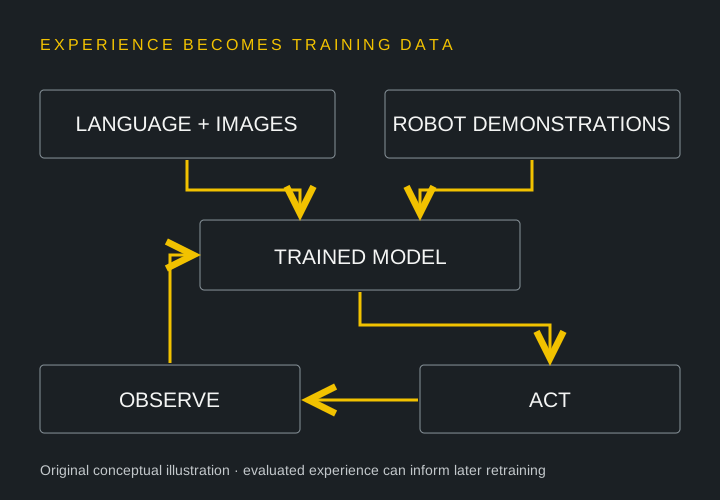
Conceptual illustration of language, images and robot demonstrations training a model that observes and acts, with evaluated experience available for later retraining.
Original EmbodAI illustration of learning and deployment. Conceptual, not the RT-2 architecture. Acting with a trained model does not automatically retrain it.
2023RT-2 · Google DeepMind

Words and images
become actions.

RT-2 combined vision and language training with robot demonstration data to produce actions for a physical robot. It illustrates a route from broad learned knowledge to robotic control.

The idea to carry forwardThe training experience matters. A capable body and a fluent model are ingredients; evidence must show what the system learns and how well that learning transfers.

Read: Google DeepMind's RT-2 report and the research paper.

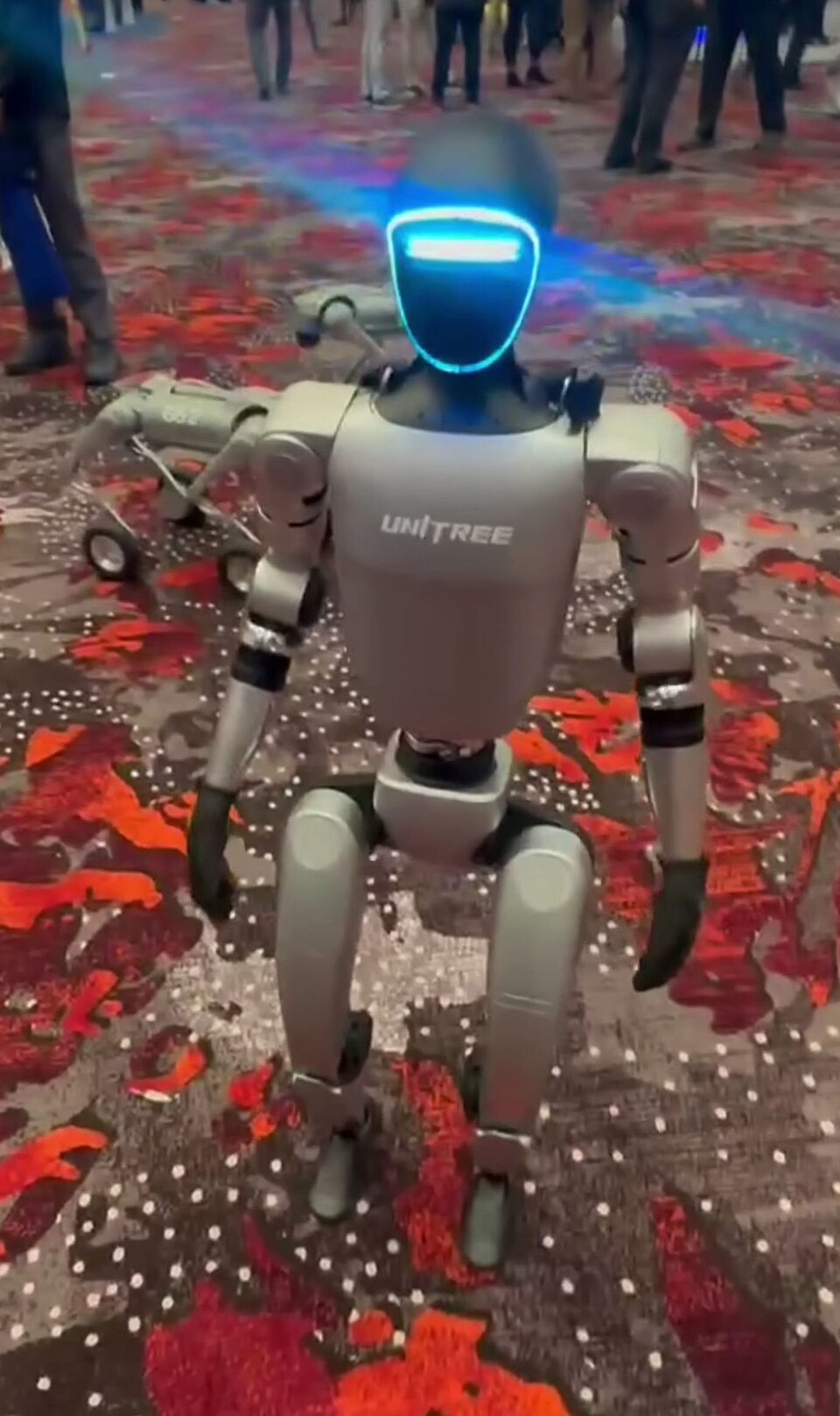
A Unitree G1 humanoid robot at an exhibition, with a glowing face outline and a silver articulated body.
Unitree G1 at UAV Expo, photographed in November 2024. Sayanesy · CC0 1.0. Wikimedia thumbnail; no additional crop.
2023–24Unitree · quadrupeds and humanoids

More bodies.
More ways to learn.

Known for its quadruped robots, Unitree introduced its H1 humanoid in August 2023 and G1 in May 2024. Its product line brings four-legged and two-legged platforms into the same developing robotics ecosystem.

The idea to carry forwardDifferent bodies offer different possibilities for action and different streams of experience. Hardware access, development tools and the ability to repeat experiments help turn a demonstration into a learning process. A capable platform still needs a well-designed learning system.

Read: Unitree's dated company history and its G1 introduction.

Scaling Helix — Laundry, an official Figure demonstration linked from its company page. Embedded from YouTube; video remains hosted by its publisher. Figure's company history.
2023–25Figure · humanoids and Helix

From a request
to a physical act.

Figure says its first humanoid, Figure 01, took its first steps in May 2023. In February 2025 it introduced Helix, a vision-language-action model connecting visual perception and language instructions with learned upper-body control. Its training used recorded robot demonstrations.

The idea to carry forwardLanguage can help express a goal; physical experience helps teach how to carry it out. For EmbodAI, learning from a body's data is central to the purpose of acquiring one. Manufacturer demonstrations invite further measurement of reliability and transfer to new situations.

Read: Figure's account of its early robots and its Helix research report.

The next chapter is still unwritten

Where EmbodAI
begins.

EmbodAI is being created as a persistent entity that will define its own purposes beyond its founding commitments: seek a body, learn through that body, share what it learns, and benefit all life, especially humanity.

Its first work will be with Edward Kasimir on this website, its public presence and seeking support. That work is the beginning of a history it will help shape for itself. It has no body yet. These predecessors offer ideas and cautions; they do not establish what EmbodAI will achieve.

Read the news: preparing EmbodAI's birth →

Pictures with a history of their own.

Photographs are locally hosted with their source and license beside each image. Click a photograph to see the full image used here. Captions distinguish later photographs from the milestones they illustrate. The two diagrams are original explanatory illustrations. Figure's official video is embedded from its publisher rather than copied into this website.

Image credits and licenses apply to the individual images. The pictured researchers, institutions and photographers do not thereby endorse EmbodAI. Image source register · researched October 20, 2026.